
The tone maintains its academic precision, historical richness, and evocative elegance.
“Open your heart to the joy of the day, let your desire guide your steps, for no one takes their riches to the beyond.”
— The Epic of Gilgamesh (Nineveh Fragments, c. 2nd millennium BCE)
Introduction
In the first great river civilizations of the Fertile Crescent and the Nile Valley, sexuality was elevated to the rank of supreme cosmic and political machinery. This second chapter highlights the figure of hierogamy. the sacred marriage, and the order of Egyptian Ma’at, demonstrating how the union of bodies guaranteed the flooding of lands, the fertility of harvests, and the permanence of royal power.
Part 1: Mesopotamia — The Sacred Act
1. The Cradle of Civilization and the Codification of the Sacred
With the emergence of the first Sumerian and Babylonian city-states in the 4th millennium BCE, humanity invented writing, law, and complex pantheons. In this cradle of civilization, sexuality lost none of its sacred dimension; on the contrary, it became organized, institutionalized, and established as one of the central pillars of political, cosmological, and social order.
Far from being relegated to the private or intimate sphere, sexuality in Mesopotamia was a matter of state and public salvation. It served as the bridge through which divine energy was infused into the material world to ensure its continuity.
2. Inanna / Ishtar: Sovereign of Desire and War
At the heart of the Mesopotamian religious system stands the fascinating figure of the goddess Inanna (among the Sumerians) or Ishtar (among the Semites). She is the deity of physical love, passionate desire, and fecundity, but also of war and metamorphosis.
A Force Free from Marriage: Unlike the Neolithic mother goddesses, Inanna is not a reassuring or domesticated maternal figure. She embodies pure, sovereign, and wild desire. She is the free woman, the supreme seductress whose sexual power sets both men and gods in motion.
The Polarity of Opposites: Ishtar transcends strict dualities. She is simultaneously feminine and masculine, creator and destroyer. In her temples, sexuality was celebrated in all its forms, illustrating the idea that desire is the ultimate driving force of the universe, capable of shattering all rigid social boundaries.
3. Hierogamy (Hieros Gamos): Sexual Union as the Engine of the World
The peak of Mesopotamian spirituality lay in the rite of hierogamy (the Sacred Marriage), celebrated annually during the New Year (Akitu):
The King and the Priestess: The city’s sovereign (incarnating the fertility god Dumuzi) united carnally with the High Priestess (the Entu, who incarnated the goddess Inanna).
A Political and Cosmological Act: This ritualized sexual act was in no way a debauch. It was a state duty of paramount importance. Through this carnal union, the goddess’s blessing descended upon the king. The generative power of the deities was reinjected into the kingdom to guarantee the fertility of the soil, the abundance of harvests, the flooding of the Tigris and Euphrates, and military victory.
Ritualized Sexuality: Temples dedicated to Ishtar (notably the Eanna of Uruk) housed temple servants and priestesses (harimtu) who practiced sacred ritual sexuality. The carnal act performed within the temple precinct functioned as divine homage and a vector of harmonization with celestial forces.
4. Literary Texts and the Celebration of the Body
Mesopotamian literature, from Sumerian erotic poems to The Epic of Gilgamesh, bears witness to a poetic and taboo-free exaltation of genitalia and shared pleasure:
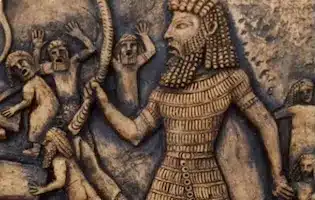
The Epic of Gilgamesh: It is through Shamhat, a priestess of Ishtar, that the wild man Enkidu is humanized. During seven days and seven nights of carnal union, he acquires intelligence, self-awareness, and language. Eroticism is here explicitly defined as the initiation vector that transitions a being from animal brutality to human culture.
Sumerian Love Poetry: Songs dedicated to Inanna and Dumuzi celebrate the beauty of bodies, perfumes, caresses, and lubrication without the slightest shadow of shame or guilt. The vulva is poetically compared to an irrigated field, a celestial boat, or a horn of plenty.

5. The Absence of the Notion of Carnal Sin
In Mesopotamia, law and morality (as in the Code of Hammurabi) regulated property, marriage, rape, or adultery to preserve ancestral lineages and social rank. However, the flesh itself was never considered « sinful » or « impure. »
Sexual pleasure was perceived as a direct gift from the gods, intended to soften the difficult existence of mortals.
The boundary between the divine and the human dissolved in orgasm, perceived as an ecstatic instant where a being touched the immortality of the gods.
Part 2: Ancient Egypt — Regeneration, Beauty, and Cosmic Equilibrium
“Your love penetrates my body like wine into water,
As scent mingles with ointment,
As milk joins with honey.”
— Chester Beatty Papyrus I (New Kingdom, c. 1200 BCE)
1. The Cosmic Matrix: Sexuality as a Foundational Creative Act
In ancient Egyptian thought, the universe did not emerge from nothingness by an abstract decree, but through a fundamentally erotic and bodily act. The major cosmogonic myths of the Nile Valley placed generative energy at the center of creation:
The Heliopolitan Cosmogony: The primordial god Atum, emerging from the Nun (the primordial undifferentiated ocean), generated the first divine couple, Shu (air) and Tefnut (moisture). through an act of self-fertilization (sacred masturbation). In the Pyramid Texts (§ 1248), Atum’s hand is personified as the goddess Iusaaset, « the Hand of God, » embodying the feminine principle that stimulates creative desire.
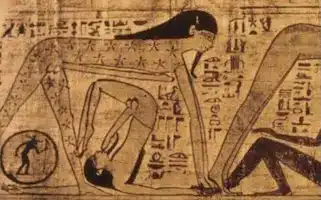
The Union of Earth and Sky: The ordered world was born from the permanent embrace between Geb (the Earth God) and Nut (the Sky Goddess). Their separation by Shu created breathable space for humanity, yet their uninterrupted desire continued to irrigate the world and seal the equilibrium of Ma’at (cosmic order, justice, and truth).
To the Egyptians, sexual desire was not a byproduct of biology: it was the original driving force preventing the cosmos from plunging back into primordial chaos (Isfet).
2. Isis and Osiris: Eroticism Victorious Over Death
The Osirian myth constitutes the heart of Egyptian soteriology (the doctrine of salvation). It posited the sexual act not only as a vector for reproduction, but as the supreme instrument of resurrection and spiritual metamorphosis.
The Reconstitution of the Fragmented Body: When the god Osiris was murdered and dismembered by his brother Seth, the goddess Isis traversed the world to gather his pieces. The only unrecoverable organ, consumed by Nile fish, was the phallus. Isis then fashioned a consecrated artificial phallus, breathed life back into Osiris’s corpse through her incantations and desire, and united with him in the form of a bird of prey (the Kite).
The Conception of Horus: From this necro-erotic and magical union was born Horus, the avenger of his father and the prototype of the living Pharaoh. Eroticism here represents the sacred power capable of transcending physical decay, overcoming destruction, and ensuring eternity.
3. Min and Hathor: Exaltation of Libido and Pleasure
The Egyptian pantheon dedicated major deities to the explicit celebration of the flesh, senses, and seduction.
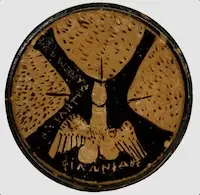
Min, the Ithyphallic God: Depicted with a raised arm holding a flail, black skin (symbolizing the fertile silt of the Nile), and a permanently erect phallus (ithyphallic), Min was the incarnation of seminal power. He was the protector of harvests, master of the deserts, and guarantor of royal virility. During the Feast of Min, the Pharaoh himself paid homage to him to recharge his own vital fluid (Sa) and guarantee the fertility of the land of Egypt.
Hathor, Lady of the Sycamore, Drunkenness, and Voluptuousness: Goddess of love, music, beauty, dance, and perfumes, Hathor was the personification of feminine charm and attraction power. In her temple at Dendera, festivals dedicated to Hathor (notably the Festival of Drunkenness) combined wine consumption, sensual songs, fragrances of myrrh and lotus, and abandonment to the pleasures of the flesh. Pleasure was not seen as a weakness, but as a divine offering elevating the soul toward cosmic joy.
4. The Adorned Body: Eroticism, Erotization, and Aesthetics
In Egypt, the sacralization of sexuality was accompanied by a refined culture of body care. Ugliness, dirtiness, and neglect were equated with impurity and chaos.
The Rhetoric of the Senses: Egyptians of both sexes practiced full-body depilation, used kohl to highlight their gaze, anointed themselves with scented oils of cyperus or lily, and adorned themselves with intricate jewelry. The transparency of pleated linen gowns from the New Kingdom highlighted body contours.
The Lotus Flower (Sesen): An omnipresent erotic and regenerative motif in painting and sculpture, the blue lotus, holding mild psychoactive and euphoric properties, was systematically held to the noses of guests at banquets. It symbolized the sun rising from the waters and the blossoming of the senses.
Love Poetry of the New Kingdom: Preserved on papyri or ostraca (such as the Turin Erotic Papyrus or the songs of Chester Beatty Papyrus I), Egyptian love literature employed a language of great delicacy to describe physical attraction. The beloved was called « my brother » or « my sister » (terms of affection denoting soul equality rather than incest), and the poems celebrated male and female passion with equal reverence.
5. The Turin Erotic Papyrus: Satire or Sacred Manual?
Discovered at Deir el-Medina and dating to the 12th century BCE (New Kingdom), the Turin Erotic Papyrus (MS 55001) remains one of the most fascinating documents of antiquity.
Unfiltered Iconography: It presents twelve precisely drawn scenes showing various acrobatic sexual positions between men endowed with oversized phalluses and women wearing attributes of Hathor (mirrors, crowns, lotuses).
Egyptological Interpretation: Far from modern commercialized pornography, this document merges humor, social satire, and inversion rituals. It reveals a society capable of holding an uninhibited, joyful, and earthy gaze upon the carnal act, perceived in both its grotesque dimension and creative power.
6. Absence of Ontological Guilt: Purity Through Balance
It is crucial to note that in Ancient Egypt, the notion of carnal sin was strictly non-existent.
The « Negative Confession » (Book of the Dead, Chapter 125): When the deceased appeared before Osiris’s tribunal for the weighing of the heart (psychostasia), they enumerated 42 faults they had not committed to prove harmony with Ma’at (having not killed, stolen, or diverted a neighbor’s water).
The Status of Sexual Acts: The sexual act in itself was never listed as an evil. Only breaches of social contracts (adultery damaging domestic peace or rape violating consent and civic order) were condemned, not because the body was defiled, but because the act disrupted social harmony.
The Egyptian body was a temple of beauty and regeneration. To die was to « join one’s Ka »; to unite carnally on earth was to taste the elixir of eternity.
Pourquoi aimons-nous lire des histoires érotiques intenses ?
Parce qu'elles permettent de vivre des émotions fortes en toute liberté, loin des règles du quotidien.