
“There is no passion more intense than that which shakes off the yoke of old superstitions to rediscover the taste of nature.”
17th-Century Libertine Writings
Introduction
At the dawn of modern times, Renaissance humanism and the rise of philosophical libertinism marked the first major fissure in the dogmatic monolith. This eighth chapter analyzes the gradual reconquest of the pleasures of mind and body, wherein the critique of established authorities paved the way for a sovereign redefinition of individual freedom and enjoyment.
1. Humanism and the Rehabilitation of the Flesh
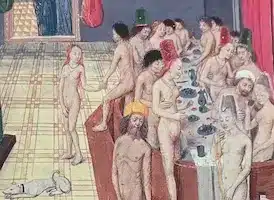
With the rediscovery of ancient Greek and Latin texts, the humanism of the 15th and 16th centuries progressively shattered the shackles of medieval guilt.
Art and Anatomy: Renaissance artists (Michelangelo, Titian, Leonardo da Vinci) dissected bodies and celebrated the plastic beauty of men and women without viewing it as the immediate mark of damnation. The body once again became a masterpiece of nature.
Rabelais and the Utopia of Thélème: In Gargantua, François Rabelais offered a brilliant subversion of monastic rule with the Abbey of Thelema, whose sole rule was « Do what thou wilt. » Its men and women lived free, well-dressed, honorable, and educated, guided by a natural inclination that constantly drove them toward virtue and beauty.
2. The Scientific and Cartesian Fracture
The 16th and 17th centuries witnessed the collapse of ancient cosmological certainties.
The Scientific Revolution: Copernicus, Galileo, and later Newton displaced the Earth from the center of the universe. The human body ceased to be the mystical, cosmic theater of an invisible war between angels and demons, becoming instead an object of physiological study.
Cartesian Dualism: By radically separating thinking substance (Res cogitans) from extended substance (Res extensa), René Descartes rationalized the body as a complex anatomical machine. Though he still separated mind from matter, he stripped the flesh of its purely infernal burden and opened the door to its objective analysis.
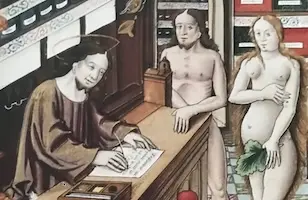

3. Erudite and Philosophical Libertinism
In the 17th century, in reaction to the rigorism of the Counter-Reformation and the wars of religion, the current of erudite libertines emerged.
The Critique of Dogma: Free thinkers such as Théophile de Viau, Gabriel Naudé, and Cyrano de Bergerac rejected the blind authority of scholastic theology. They advocated a return to nature, materialism, and philosophical hedonism.
The Emancipation of Enjoyment: Libertinism, initially intellectual and critical in the face of « old superstitions, » gradually extended to the sphere of manners. Pleasure was no longer an offense against God, but a legitimate component of the individual’s sovereign freedom, reclaiming the right to enjoy existence free from ecclesiastical constraints.
Pourquoi aimons-nous lire des histoires érotiques intenses ?
Parce qu'elles permettent de vivre des émotions fortes en toute liberté, loin des règles du quotidien.