
When priests were forced into celibacy in 1139, intimacy became a sin
“The flesh lusteth against the Spirit, and the Spirit against the flesh: and these are contrary the one to the other: so that ye cannot do the things that ye would.”
— Saint Paul, Epistle to the Galatians (5:17, c. 1st century)
Introduction
With the advent and institutionalization of Christianity, Western civilization underwent an unprecedented anthropological rupture. This sixth chapter highlights the « Great Shift » theorized by Augustinian thought, which elevated carnal desire into a hereditary stain, permanently transforming the body from a space of communion into a seat of guilt and sin.
Single Part: The Great Shift — The Blaming of the Flesh and Dogmatic Rupture
1. The Ontological Inversion: From Vital Force to the Seat of Sin
After millennia during which the body was viewed as a cosmic sanctuary, a vector of harmony, or a symbol of civic sovereignty, the end of Roman antiquity witnessed the most radical of intellectual mutations. Within a few centuries, the perception of sexuality shifted from celebration to widespread suspicion.
This « Great Shift » was not merely a moral nuance: it represented an ontological inversion. The sexual act, formerly an engine connecting the human microcosm to the divine macrocosm, was reinterpreted as the very site of the Fall, of defilement, and of the fracture separating humanity from the Creator.
2. Augustinian Theology and the Genealogy of Original Sin

The major architect of this transformation was Saint Augustine (354–430). Traumatized by his own past debauchery and influenced by Manichean dualism, the Bishop of Hippo theorized the dogma of original sin in a way that would leave a lasting mark on the West.
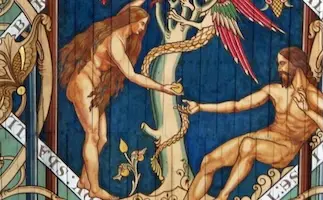
- Concupiscence (Concupiscentia): For Augustine, Adam and Eve’s sin did not merely break the relationship between humanity and God; it disordered human nature itself. The most evident marker of this disorder was involuntary arousal and uncontrolled desire—flesh that no longer obeyed the will.
- Hereditary Transmission Through the Carnal Act: According to this doctrine, the original fault is transmitted biologically from generation to generation through the procreative act itself, because that act is inherently tainted by concupiscence. Physical union thus becomes the vehicle for a hereditary flaw.
- The Eradication of Pleasure: Even within marriage, seeking sexual pleasure for its own sake is categorized as a transgression. The carnal act is tolerated only when strictly limited to its sole procreative purpose (bonum prolis).

3. Monastic Asceticism: The Tamed Body and Hatred of Matter
Alongside the fixing of dogma, the eremitic and monastic movement (from the Egyptian Desert Fathers like Saint Anthony to Benedictine rules) established virginity and celibacy as the supreme spiritual ideal.
- The Inner Martyrdom: Roman persecutions having ended, the new martyrdom no longer consisted of shedding one’s blood under the executioner’s blade, but of waging a perpetual battle against the body’s impulses. The flesh was designated as the inner enemy (hostis domesticus).
- Mortification: Extreme fasting, prolonged vigils, sleep deprivation, and flagellation became techniques for neutralizing the libido. The body was weakened, withered, and disciplined to prevent the « demons of lubricity » from awakening.
4. The Institutionalization of Control: Confession, Penitentials, and the Economy of Fault
During the Middle Ages (from the 6th to the 13th century), the Church structured the control of bodies through legal and pastoral instruments of formidable precision:
- Penitential Books: These manuals for confessors drew up an exhaustive typology of sexual practices, associating every position, period, or partner with a penitential penalty measured in days, months, or years of fasting on bread and water.
- The Calendar of Continence: Marital sexuality was progressively forbidden for a large portion of the year: during Lent, Advent, Sundays, feast days, as well as during periods of menstruation, pregnancy, and breastfeeding.
- The Secession of Guilt: Desire was no longer monitored solely in its acts, but in its most intimate thoughts. The obligation of annual auricular confession (established by the Fourth Lateran Council in 1215) sealed the systematic auditing of the body by a guilt-ridden conscience.
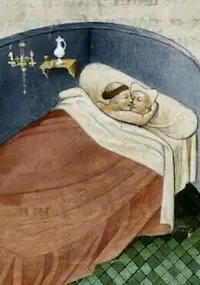
[When priests were forced into celibacy in 1139, intimacy became a sin]
5. Critical Deconstruction of Dogma: Texts and Political Instrumentalization
Critical analysis of foundational texts, following the textual re-readings conducted by contemporary essayists such as Thomas Guénolé, highlights the precise mechanisms of this ideological construction:
- The Manufacturing of Obsessive Guilt: Ecclesiastical authorities extracted and over-selected normative fragments (notably in Pauline epistles or certain Levitical codes) while rendering invisible or excessively allegorizing texts celebrating the flesh, such as the sensual Song of Songs.
- The Instrumentalization of Text for Social Regulation: The transformation of sexuality into a source of permanent defilement did not stem from a universal metaphysics, but from a strategy of power. By establishing natural desire as an intrinsic fault for which it alone held the key to absolution, the institution ensured total control over individual intimacy and conscience.
6. Assessment of the Derailment: The Rupture of Cosmic Continuity
By stripping the sacred from the flesh and relegating it to an inaccessible heaven, this dogmatic shift produced lasting cultural trauma:
- The Schizophrenia of the Body: Human beings were summoned to choose between their spiritual aspiration (pure) and their biological reality (impure).
- The Disappearance of Erotic Knowledge: Refined sciences of love (such as those taught in India, China, or ancient Egypt) were eradicated and assimilated into demonology or debauchery.
- Power Through Guilt: By declaring the flesh intrinsically diseased, the religious institution imposed itself as the sole physician and unique intermediary dispenser of salvation.
Pourquoi aimons-nous lire des histoires érotiques intenses ?
Parce qu'elles permettent de vivre des émotions fortes en toute liberté, loin des règles du quotidien.